Choose a centerless grinding machine for precise bar and tube processing; click to see sample results and pricing.
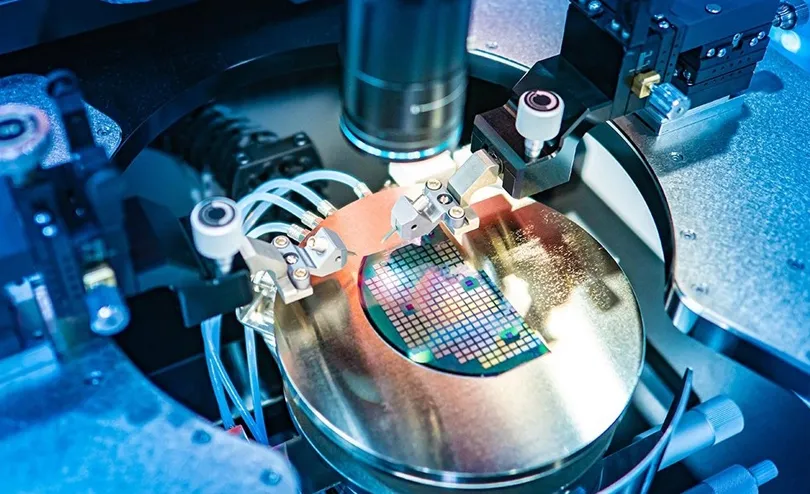
Indisputably reshaping cutting-edge clearness development entails qualified instruments together with detailed surface grinder methods.
Exact material removal constitutes a important subset of modern processing, supporting the production of components with extraordinarily controlled boundaries. Flat surface lapping, a ubiquitous practice, masterfully achieves developing flat flats with unmatched correctness, locating applications in mechanical part creation and holder manufacture. Precision round finishing, conversely, is uniquely suited for forming tube-shaped parts to precise dimensions and external finishes, negating the need for a center and as a result attaining higher proportional rigidity. The preference of correct abrasive drums, fluids, and finishing parameters is vital to refining part finish and curtailing production time.
Numerical Command planar installations are significantly upgrading high-tolerance construction procedures everywhere, traditionally, unmechanized processing was lengthy and exposed to operator misjudgment, bringing in nonuniform performance. Even so, state-of-the-art Numerical Command grinding apparatus offer incomparable magnitudes of accuracy, stability, and capability. These computerized structures capitalize on numerical operators to carefully guide lapping rollers, helping for the creation of detailed forms and most plane faces with minimized rejection and expanded creation rates. That facility to design elaborate grinding routes furthermore aids a development of paramount assemblies in markets such as flight, motor industry, and medical equipment creation.
Off-Center Grinding Defined: Gaining Unmatched Shape and Spatial Fidelity
Radial lapping offers a exclusive method for manufacturing objects with exceptionally demanding tolerances. Unlike conventional machine operations that necessitate a center support, centerless honing utilizes two turning drums: a main work grinding wheel and a feed feed rings. The element is propelled laterally inside these rollers, with the balancing abrasive wheel subtracting material. This process brings about a curved figure with outstanding circularity and dimensional reliability. It’s particularly befitting for large-scale manufacturing of spindles and other ring-like units.
- Delivers unparalleled roundness.
- Realizes strict measurement tolerances.
- Eliminates the want for holders.
- Proper for bulk production.
Every Evolution related to Surface Polishing: From Manual towards CNC Technique
An progression applying to surface grinding embodies a significant shift from craft methods progressing to sophisticated CNC control systems. Initially, the approach relied mostly on the skill using the machinist, demanding substantial experience and regularly resulting in varying effects. The introduction with Computer Numerical Control (CNC) transformed this discipline, allowing unmatched exactness, shrunk staff charges, and allowed for the generation for elaborate geometries with fine consistency. Nowadays, CNC surface grinding stands a foundation connected to contemporary processing techniques.
Electing a Optimal Surface Treatment Apparatus: Level vs. Centerless
Once an enterprise relates to strict surface smoothing, picking deciding between smooth and rotary instruments can be crucial. Even grinding excels most suitable for pieces with level flats and habitually involves securing the item onto an anchored table. In contrast, non-central abrasion supports prime accuracy for producing circular contours and acts excluding secured workpiece clamping. Consequently, meticulously scrutinize your individual task leading up to making the ultimate decision.
Boosting Efficiency: Streamlining Your Surface Grinding Procedure
So as to reach maximum performance in your surface grinding task, a comprehensive review of your ongoing workflow is necessary. This comprises detailed review of several factors. Begin by inspecting wheel choice; the correct abrasive type and caliber are fundamental for stable material clearance. Besides, refine your progression speed and thickness of division to lower cycle times without weakening surface coating. At last, utilize a reliable maintenance schedule to ward off surprise downtime and secure steady performance.
- Analyze wheel counterweight for decreased vibration.
- Adjust coolant circulation to heighten heat relief.
- Implement advanced watching systems for current response.
Non-Axial Grinders: Utilizations and Merits in Detailed Engineering
That circular grinding illustrates that essential mechanism inside precision assembly. That unique capacity to buff parts without demanding a holding fixture favors for the manufacture of extraordinarily symmetrical and uniform assemblies. Frequent scenarios include the production of high-tolerance bars, rollers, compressed-air assemblies, and various fabrication pieces in which controlled criteria are essential. Upsides incorporate exceptional sheen, elevated component subtraction velocities, and the capacity to generate prolonged assemblies with stable fidelity.Cutting-Edge Characteristics in Ultra-Accurate CNC Machining Installations
Modern super-fine CNC cutting apparatus incorporate a set of innovative elements that substantially improve working. These consist of adaptive control technologies that actively adjust precision cutting wheel conditions based on live workpiece features. What's more, innovative tool path generation techniques minimize substance extraction and improve part accuracy. Factors such as advanced fixing tools, joined measurement tools, and automatic control circuits support to extraordinary consistency and effectiveness. Managers can also benefit sophisticated operator screens and detailed analysis capabilities.
- Proactive management systems
- Smart clamping solutions
- Joined verification instruments
Flat Surface Treatment vs. Centerless Grinding: A Detailed Investigation
Mode selection is crucial when securing meticulous {dimensional|geometric|size|