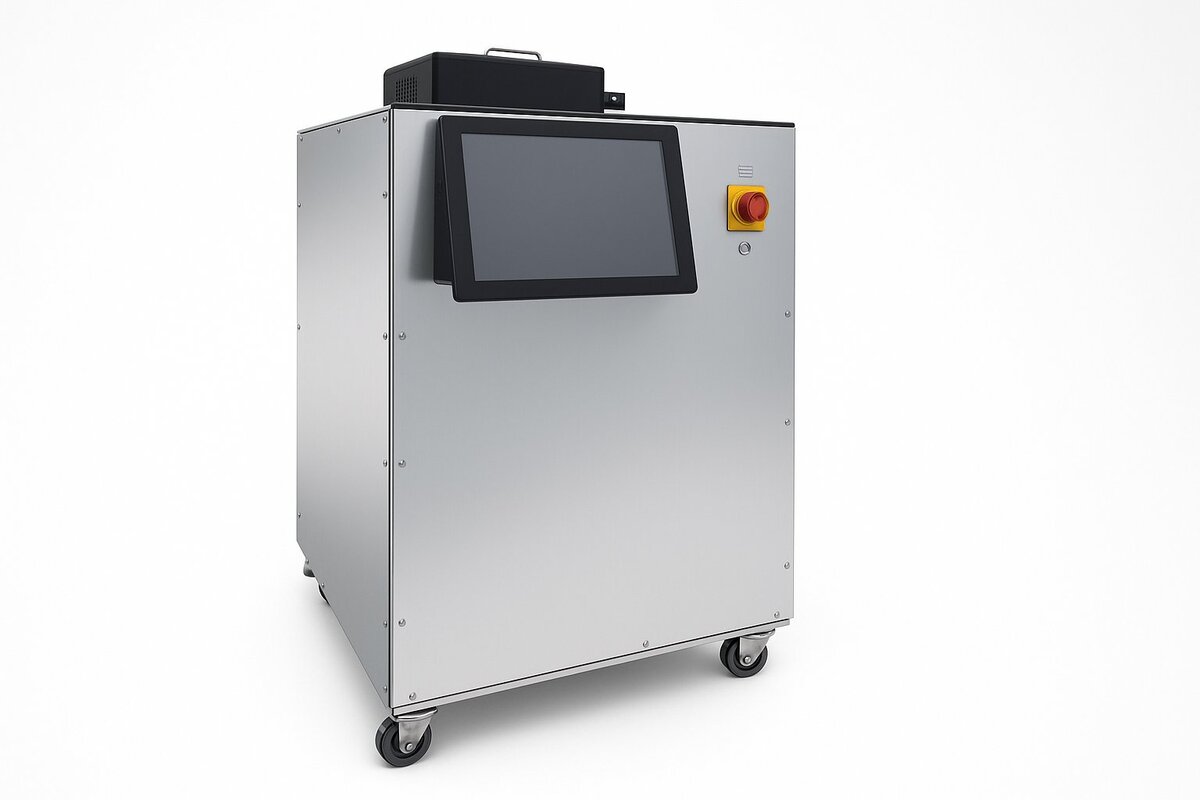
industry leading icp etcher cloud enabled analytics?

Pivotal Elements relating to plasma processing within semiconductor fabrication. This process exploits excited plasma to accurately strip base components for controlled design during miniature engineering. By tuning core determinants like chemical makeup, electrical intensity, and gas tension, the rate of material removal, selectivity index, and anisotropy can be finely tailored. Charged plasma treatment has modernized electronic patterning, measuring instruments, and modern electronics.
- Also, plasma etching is comprehensively studied for fields such as optics, biomedical applications, and material sciences.
- Numerous forms of plasma etching can be found, including chemical ion etching and inductively coupled plasma etching (ICP), each with singular positive aspects and weaknesses.
The detailed characteristics of plasma etching necessitate a extensive grasp of the underlying physical principles and chemical dynamics. This exposition seeks to offer a thorough recap of plasma etching, including its core concepts, multiplex models, implementations, strengths, problems, and anticipated innovations.
Riechert Microfabrication Precision Devices
Concerning tiny device fabrication, Riechert etchers distinguish themselves as a pivotal equipment. These novel devices are noted for their extraordinary sharpness, enabling the creation of complicated configurations at the microscopic extent. By employing sophisticated etching methods, Riechert etchers establish faultless control of the manufacturing sequence, generating top-grade outcomes.
The scope of Riechert etchers embraces a comprehensive array of realms, such as semiconductors. From building microchips to designing cutting-edge medical gadgets, these etchers represent a foundational element in forming the prospects of tech tools . With pursuit to excellence, Riechert champions guidelines for exact microfabrication.
Reactive Ion Etching: Essentials and Usage
Reactive ion etching functions as a indispensable technique in device fabrication. RIE uses a integration of ionized components and reactive gases to strip materials with targeted removal. This mechanism entails bombarding the workpiece layer with energetic ions, which engage with the material to manufacture volatile chemical products that are then evacuated by a suction system.
RIE’s capability to achieve anisotropy makes it notably beneficial for producing sophisticated layouts in silicon chips. Applications of RIE cover the assembly of electronic transistors, chip assemblies, and lightwave devices. The technique can also construct microscopic grooves and electrical conduits for advanced memory chips.
- Reactive ion processes enable meticulous monitoring over chemical removal rates and processing distinctness, enabling the generation of complex features at ultrafine scale.
- Several chemical gases can be applied in RIE depending on the base material and target etch characteristics.
- The non-isotropic quality of RIE etching permits the creation of steep edges, which is essential for certain device architectures.
Achieving Fine Control in ICP Etching
ICP plasma etching has arisen as a principal technique for generating microelectronic devices, due to its notable capacity to achieve solid directional accuracy and targeted etching. The careful regulation of plasma conditions, including energy delivery, compound proportions, and applied pressure, facilitates the detailed optimization of etching velocities and surface patterns. This pliability allows the creation of complex arrangements with controlled harm to nearby substances. By optimizing these factors, ICP etching can reliably curb undercutting, a typical complication in anisotropic etching methods.
Comparative Analysis of Plasma Etching Methods
Advanced plasma removal techniques are extensively used in the semiconductor realm for fabricating fine patterns on electronic platforms. This review reviews varied plasma etching techniques, including ion beam etching, to appraise their efficiency for various surfaces and applications. The summary highlights critical aspects like etch rate, selectivity, and device performance to provide a detailed understanding of the benefits and flaws of each method.
Tuning Plasma Features for Maximum Etching Output
Reaching optimal etching capacities in plasma strategies calls for careful setting modification. Elements such as electric intensity, compound mixing, and density rate substantially affect the surface modification rate. By precisely adjusting these settings, it becomes feasible to enhance result robustness.
Understanding Chemical Mechanisms in RIE
Reactive charged particle etching is a principal process in microfabrication, which requires the implementation of reactive ions to finely pattern materials. The central principle behind RIE is the association between these highly energetic ions and the workpiece surface. This interaction triggers ionic reactions that parse and ablate molecules from the material, forming a specified configuration. Typically, the process uses a fusion of plasma gases, such as chlorine or fluorine, which turn into plasma ions within the plasma chamber. These ionized particles bombard the material surface, starting the patination reactions.Success of RIE is affected by various parameters, including the form of material being etched, the adoption of gas chemistries, and the process variables of the etching apparatus. Meticulous control over these elements is necessary for obtaining superior etch patterns and reducing damage to neighboring structures.
Managing Spatial Etch Patterns in ICP
Obtaining accurate and regular outlines is key for the functionality of diverse microfabrication tasks. In inductively coupled plasma (ICP) removal systems, management of the etch design is paramount in setting extents and contours of features being engineered. Notable parameters that can be changed to impact the etch profile include chemical environment, plasma power, heated layer condition, and the reticle arrangement. By meticulously managing these, etchers can manufacture contours that range from uniform to precisely oriented, dictated by fixed application demands.
For instance, directional anisotropic etching is usually preferred to create deep trenches or connection holes with precise sidewalls. This is accomplished by utilizing intense bromine gas concentrations within plasma and sustaining limited substrate temperatures. Conversely, symmetrical etching produces smooth profile profiles owing to etching method's three-dimensional character. This mode can be practical for macro scale adjustments or surface refinement.
Besides, leading-edge etch profile techniques such as high-aspect ion etching enable the generation of remarkably controlled and high-aspect-ratio features. These processes usually involve alternating between plasma bursts, using a blending of gases and plasma conditions to secure the desired profile.
Identifying primary contributors that influence etch profile formation in ICP etchers is crucial for boosting microfabrication methods and accomplishing the specified device performance.
Precision Etching Methods in Chip Fabrication
Charged gas etching is a fundamental practice used in semiconductor construction to sensitively reduce compounds from a wafer interface. This practice implements energized plasma, a concoction of ionized gas particles, to strip focused regions of the wafer based on their compositional qualities. Plasma etching enables several merits over other etching processes, including high vertical selectivity, which contributes to creating precise trenches and vias with minimal sidewall damages. This correctness is fundamental for fabricating cutting-edge semiconductor devices with multi-layered patterns.
Employments of plasma etching in semiconductor manufacturing are wide-ranging. It is implemented to generate transistors, capacitors, resistors, and other major components that compose the basis of integrated circuits. Furthermore, plasma etching plays a important role in lithography operations, where it makes possible the meticulous organization of semiconductor material to map circuit arrangements. The accurate level of control provided by plasma etching makes it an indispensable tool for contemporary semiconductor fabrication.
Novel Developments in Etching
Advanced plasma treatments experiences ongoing advancement, driven by the surging push towards rie etcher enhanced {accuracy|precision|performance