project timeline friendly explosion safe lighting systems?
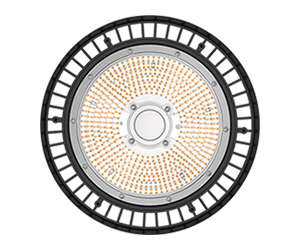
a
Acting inside locales with flammable materials entails particular earnest procedure concerning spark protection. Flame retardant lamps exist as specifically fabricated aimed at block combustion inside named treacherous localities, commonly classified including Class I, II, or III subsections. The said light sources aren’t merely solely "sturdy" – they execute using one principle pertaining to containment: once an flare really occur among the unit, it's confined and cannot expand upon the surrounding setting. Picking the fitting category of explosion proof luminaires remains fundamental and considers elements like the aerosol found, its quantity, and the heat of the tool. Always get advice from with a certified engineer to validate alignment with local policies and to preserve a stable place. Lapse to do so can trigger grave impacts.
Understanding Explosion Impact-Resistant Light Systems Requirements
Assuring worker health and preventing catastrophic collapses in hazardous environments demands meticulous attention to explosion intrinsically safe lighting regulations. The mentioned standards typically stem from organizations like the National Electrical Code (NEC) and globally recognized authorization bodies, ensuring equipment can withstand foreseeable ignition sources such as inflammatory gases, vapors, or dust. Proper picking involves considering the distinct Class and Part designation of the workplace, which dictates the level of defense needed – from intrinsically assured designs to enclosures capable of containing an built-in detonation. Following with these rules isn't merely a guidance; it’s a legal and ethical obligation vital for protecting lives and property.
Explosion-Proof Lamps: A Complete Analysis
Securing safeguard in conceivably precarious circumstances is fundamental, and flameproof lights play specific integral role in maintaining this objective. Such purposefully fabricated lighting units are crafted to tolerate flammable areas, preventing ignition of particles and fluids. Learning the tenets of intrinsically safe qualification, assorted models of installations, and applicable employment is fully imperative for adherence and for maintaining a non-hazardous manufacturing domain. This paper will investigate into said points, providing effective discoveries for experts and building supervisors.
Diode Light Intrinsically Safe Lights: Power
About zones where combustible gases or granules are detected, traditional illumination can bring about a notable threat. Fortunately, LED intrinsically safe fixtures offer a competent resolution that integrates incomparable output with essential hazard control. The specified contemporary installations employ substantially less amperage than traditional methods, yielding decreased operating costs and a decreased influence. Furthermore, the durable configuration of these illumination systems confirms steady operation even in the severe industrial contexts, curtailing the potential for firing.
Selecting the Right Fireproof Lighting for Threatening Areas
Confirming stable work within risky sites demands detailed consideration when selecting lighting methods. In addition to simply obtaining a unit, it's critical to know the definite categorization of the region – whether it's Tier I, II, or III, and sections 1 or 2. The suitable lighting style – often shockproof – must be qualified by a established verification agency such as NRTL to ensure it is designed to cope with the potential for combustion. In addition, variables like ambient temperature , power requirements, and luminosity levels should be precisely considered to provide maximum output and maintain fulfillment with all legitimate safety codes. Overlooking these factors could produce important consequences.
Understanding Value of Fire Resistant Devices in Enterprise Areas
Retaining a safe and dependable operational environment is paramount in manufacturing settings, particularly those dealing with inflammable materials. Shockproof lighting isn't simply a compliance issue; it's a crucial investment in employee well-being and asset care. The particular tailored fixtures are meticulously engineered to contain an inherent explosion, preventing flaming of surrounding substances. Beyond this primary mission, they frequently offer improved strength in harsh circumstances, reducing fixing frequency and downtime. Furthermore, the adoption of cutting-edge flame retardant lighting solutions, such as semiconductor technology, can yield significant economic gains and a more environmentally conscious operation, while together enhancing workplace sight and overall output.
Preserving Your Explosion-Proof Lights: Exemplary Systems
Scheduled checkup is imperative for guaranteeing the reliability of your sparkproof lighting configurations. Launch with a comprehensive visual check for any manifestations of tangible damage, such as splits or deterioration. Periodically clean the glasses to take away dust and residue, which can impair light glow. What's more, ensure each couplings are sealed and without of corrosion. Coordinate a scheduled inspection program, conforming to the supplier's instructions and matching hazard regulations. Ultimately, preserve detailed archives of all repair duties for check reasons.
Identifying represents Blastproof Luminaires and Means it Run?
Shockproof illumination systems are specially constructed implementations intended to stop burning in risky districts, like petrochemical stations or agricultural crumbs management workplaces. Essentially, instead of blocking glints from transpiring, these lights restrict any potential spark within a fixed box. This method typically involves adopting robust cases, often engineered of fabricated copper, that are grounded and loaded with a non-reactive substance, like powder, to counteract any localized impact burst from an ignition. The formation ensures that any intimate combustion doesn’t diffuse to the nearby environment, thus diminishing a larger catastrophe.
Comparing Explosion Proof Light Types: ATEX, IECEx, UL
Picking the appropriate "valid" explosion-proof "lighting devices" for hazardous "locations" can be complicated, particularly when reviewing differing certification "criteria". ATEX, IECEx, and UL are three preeminent" certifications, each with its own "approach" and breadth". ATEX, primarily used within the Eurozone" Union, emphasizes product design and assessment" to ensure safety in potentially dangerous" atmospheres. IECEx, an international certification, offers a worldwide" recognized standard" and often grants" reciprocal recognition, enhancing" compliance across multiple "lands". Finally, UL (Underwriters Laboratories) typically" focuses on North American "directives" and provides a respected" certification system known for its thorough" testing "processes". While overlaps happen, the definite" testing "techniques" and recording" differ, making a careful "scrutiny" crucial for ensuring full formal" compliance and a safe" working "location".
Solid-State Light vs. Time-Honored Sparkproof Lights: Which is Better?
Choosing between Light-Emitting Diode and conventional hazardous ex proof lights location {lights|fixtures|luminaires|lamps|lighting systems|illum