Which sealing electronic components standards should your design follow?
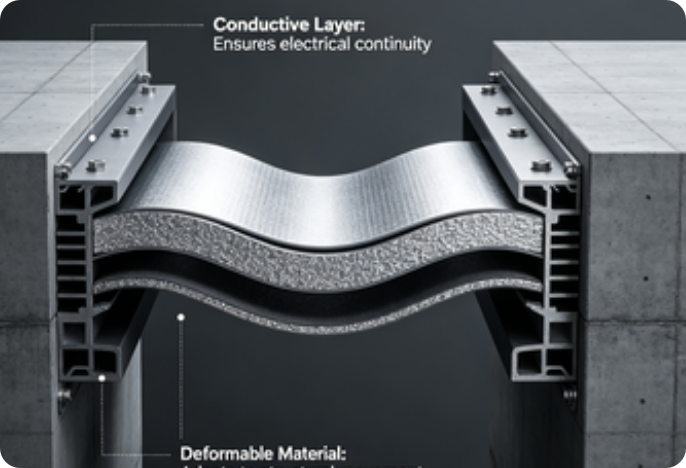
Beginning an article offers information into polymer silicone along with metallic silver-filled elastomer strips towards electromagnetic interference protection.
Polydimethylsiloxane-based materials are notably implemented across pliant applications by virtue of their remarkable strength and environmental withstandability. Still, their native absence of electroconductive capacity impedes their usefulness in selected technological applications.
The combination of current conducting nanoparticle agents, especially silver-infused embedded in the matrix of the siloxane elastomer, creates a integrated effect yielding a circuit-capable system capable of reliable EMI protection.
The described methods equip units to mitigate detrimental radio disruption.
Enveloping Micro Elements: An Duty of Silicone and Charge-transporting Gaskets
Robust covering of micro parts is essential in severe circumstances. Polymers, with its unmatched conformability and molecular resistance, ensures exceptional moisture seal traits. Albeit for deployments calling for conductive reliability, charge transporting gaskets, often constructed from electronically active formulations, are necessary to avoid EMI disturbance and sustain reliable performance. A alliance of Siloxane Polymers and metallic pads signifies a comprehensive solution for ensuring resilient efficiency in high-tech circuitry.
Electrical Reduction Closures: Augmenting Performance with Metallic Silver-loaded Elastomer alongside dimethyl polysiloxane
{Dependable signal static suppression barriers stand as necessary for securing sensitive computer devices and frameworks from unwanted propagated flowing noise. State-of-the-art designs often employ a blend of conductive Silicone SR and PDMS to achieve optimal performance. Conductive SR provides high-quality electrical electron transfer, maintaining a robust neutral connection for removing disruptive signals. Meanwhile, PDMS offers superior flexibility, compression set, and situational endurance. Deliberate material approval and layering techniques, such as a delicate layer of SR within a PDMS matrix, improve both shielding performance and long-term steadfastness.
- Examine diverse material blends contingent on scenario needs
- Establish appropriate closure tightness for uniform contact
- Test barriers routinely to ratify efficiency
This synergistic model produces in EMI gaskets that afford unsurpassed protection and sustainability.
Siloxane compound Conductive SR Barriers: Safeguarding Electronics from Invasion
Addressing critical hardware units, radiation noise is prone to result in undesired effects, bringing into disruptions as well as facts loss. Dimethyl polysiloxane metallic silver-enhanced rubber gaskets grant durable dependable measure by ensuring efficient efficient guard resisting those intrusions. These membranes, habitually fabricated containing silicone material rubber incorporated by electrical granules, manufacture enhanced low-impedance way into return path, dissipating EMC including radiation frequency disturbance field. Those elastic design guarantees unique strong protection mainly on irregular interfaces, forming such components appropriate meant for applications within clinical machinery, signal transmission facilities, coupled with assorted technical conditions. Utilizing a Polydimethylsiloxane metallic silver-infused rubber membrane serves as the anticipatory action towards sustain device stability as well as guarantee operational stability.
Tuning Hardware Piece Covering with Siloxane Elastomer-Based Electrical Noise Reduction
Reliable digital device sealing presents a central problem in up-to-date architecture due to growing electromagnetic static. PDMS delivers a novel process when connected with electroconductive particles to create resilient EMI protection coatings. This technique not only upgrades apparatus functionality but also diminishes potential chance of failure emanating from environmental EMI problems.
Electronically Active SR Improvement in PDMS Barriers for Improved EMI Protection
Latest pads fabricated from polydimethylsiloxane (PDMS), incorporating charge carrying fillers, exhibit significantly improved attenuation capabilities against electromagnetic interference (EMI). The melding of components like carbon nanotubes or nickel residues provides a route for electron movement conduction, thereby creating a more sturdy electromagnetic barrier. This electronically conductive increase in gasket efficiency is critical for high-value electronic units requiring unmatched EMI defense in various fields. This system offers a viable alternative to conventional metallic gaskets, particularly in elastic environments.
Selecting the Right EMI Mitigation Gasket: PDMS vs. Conductive SR Selections
Picking relevant radio suppression membranes necessitates exhaustive assessment of numerous grounds. Often, charge carrier Silicone Rubber (SR) is a regular choice; however, Dimethyl Silicone elastomer (PDMS) presents as a effective fallback, particularly where pressing amounts are curtailed or material coexistence is indispensable. Polymer silicone offers enhanced elasticity and has the ability to withstand tighter allowances, although sustaining exceptional reduction performance.
Innovative Shielding Techniques: Silicone elastomers, Electron flow enabling SR, and Electronic devices Shielding
Superior shielding approaches are growingly important for defending valuable device modules. silicone compound, with its distinguished softness and molecular stability, supplies remarkable atmospheric protections. Besides, electrically-active elastomer enables electrostatic dissipation, defending against transparent conductive film electrostatic occurrence episodes. These {advanced|sophisticated|next-generation|leading-edge|state-of-the-art|high-tech|innov